
Getting Started with the House Edge

Each game you will ever play at an online casino has a mathematical advantage for the house. That advantage is called the house edge, and understanding it shifts your entire experience from blind luck to educated decision-making. We intend to show you what the house edge actually represents, how it varies across the game categories we feature, and how you can use that knowledge to pick games that align with your personal risk appetite. A reduced house edge does not promise a winning session; it simply indicates the theoretical return to player over millions of simulated rounds is greater. The real value of grasping this concept is that you cease chasing myths and start making choices based on honest mechanics. At Winwin Casino, we think an educated player experiences the entertainment far more than one who approaches every spin or hand as pure mystery.
Licensing and Protection, and How Licensing Safeguards the Casino Advantage You Count On
A regulated casino works under a system that enforces truthful depiction of odds, and that structure is your final safeguard against an margin that shifts unfairly out of sight. Winwin Casino holds a licence awarded by a recognised authority that enforces regular regulatory duties, including periodic checks of our RNG data, return to player supervision, and financial integrity assessments. At the time you learn that a certain game offers a return to player of 96.5 percent, that number is not a promotional statement we made up; it is a recorded setup confirmed by independent testers who examine the mathematical model in regulated laboratory settings. The regulation functions as a legal contract among the casino, the authority, and you as the user, setting that promoted game characteristics must correspond to delivered reality or consequences occur. This regulatory layer is the cause you can trust that the edge insight you obtain will actually be relevant at the tables and reels.
Data security and financial segregation form the other half of the protection equation. Your personal information and payment details are encrypted using industry-standard TLS protocols, meaning intercepted data would be unreadable to unauthorised parties. Player funds are held in separate accounts from operational company funds, a requirement known as segregation that ensures your withdrawable balance is not exposed to business risk. While these technical safeguards do not alter the mathematical house edge, they ensure that your engagement with that edge occurs in a sterile environment where the only variables you contend with are probability and payout tables, not theft, manipulation, or insolvency. We consider this baseline fairness infrastructure to be as important as the games themselves, because a trustworthy frame is what allows you to relax and apply strategic thinking rather than worrying about whether the platform itself is legitimate.
Gambling responsibility features constitute a useful connection between house edge awareness and individual boundary management. Deposit caps, play duration alerts, periodic status updates, and opt-out possibilities are integrated within your account settings, and we encourage you to set up them before your first serious session. The house edge works constantly irrespective of your mental state, but weary, annoyed, or impulsive players frequently escalate stakes and try to recover deficits in ways that magnify the edge’s practical impact far beyond its theoretical percentage. Setting a maximum deposit that aligns with your monthly entertainment budget, and activating a session timer that nudges you after a predetermined interval, builds an external structure that strengthens the rational approach you develop by understanding the mathematics. These tools are not intended as punitive measures; they are personalised boundaries that keep the experience within the boundaries you define while completely attentive.
Banking Mechanics and the Underlying Impact of Processing Efficiency
The speed and cost of transferring money in and out of your account might seem unrelated to the house edge, but inefficiency in banking directly affects your real gameplay costs. If you deposit for gaming with a method that carries its own charges or uses an poor exchange rate, you are adding an extra expense on top of the mathematical edge you already encounter on the games. At Winwin Casino, we support a broad range of payment channels including major debit and credit cards, e-wallets, prepaid vouchers, and direct bank transfers, each with its own standard transaction time. E-wallet deposits generally show up immediately and often process withdrawals within 24 hours once verification is complete, whereas bank transfers and card withdrawals may take between three and five business days subject to the intermediary institutions. Reducing idle periods and additional costs is part of bankroll management that very few players factor into their strategy.
Account validation is the key to smooth withdrawals, and we handle it as effectively as current regulatory standards permit. When you set up an account, you will at some point be prompted to supply identification documents, proof of address, and sometimes proof of payment method ownership. Carrying out this step in advance, rather than waiting until you request a withdrawal, eliminates delays that can cause psychological frustration leading to impulsive decisions with your funds. A verified account transforms banking into a consistent routine, and reliability is a quiet ally of responsible play. We use encrypted document upload straight through your account dashboard, and our compliance team assesses submissions without delay. The precise review window is based on volume, but standard turnaround is counted in hours, not days. Once confirmed, your withdrawal limits and processing speeds activate at their regular levels, and you can schedule your cashouts around the established timelines rather than wrestling with uncertainty.
Currency support also plays a minor role in your net outcome. We accept several major currencies, allowing numerous players to handle deposits and withdrawals in their native denomination, which eliminates conversion costs at our end. When you gamble in a currency different from your account base, or when your payment instrument operates in a alternate currency, intermediary banks and processors may impose conversion spreads that chip away at your balance before you even put a bet. We suggest checking your account currency settings and adjusting them with your preferred payment method’s currency whenever possible. This simple administrative step is free and ensures that the only mathematical factor influencing your funds is the game’s house edge, not a stacked stack of financial tolls that you never deliberately agreed to accept.
Comprehending the Fundamental Mathematics Underlying Any Bet
The casino advantage is expressed as a rate of every stake that the operator anticipates to keep over the long term. If a offering has a casino advantage of 2.5 per cent, the RTP stands at 97.5 percentage points, indicating that for each one hundred units bet, the player can anticipate receiving 97.5 chips over an exceptionally big sample size. This value is not a prediction for any individual session, since variance and variability govern near-term results much more than the long-term mean does. The edge is built in in the rules and paytable, in no way in some secret mechanism that operators activate. For instance, European roulette attains its 2.7 percent house edge through a single zero pocket that returns not red nor black, while the additional double zero in American roulette pushes the margin to 5.26 percentage points while keeping the fundamental payout ratios. Grasping this difference enables you to identify superior variants of analogous offerings right away.
Figuring out the house edge on your own is a powerful habit. In a simple coin-flip game where you get even money on a correct call, a fair game returns just what you risk over time because the probability is 50 percent and the payout is 1:1. Now picture the casino introduces a rule where a specific outcome pays marginally less than the true odds show. In baccarat, the banker bet succeeds more often than it loses, yet the payout is lowered by a 5 percent commission, producing an edge of roughly 1.06 percent. The mathematics always hinges on the gap between the true probability of an event occurring and the odds the casino pays when it occurs. The bigger that gap, the larger the house edge. When you absorb that link, you stop being drawn exclusively by big jackpot numbers and start asking what the cost of pursuing them really is.
We urge you to utilize this lens to every game in our lobby. Slots usually carry edges varying from around 2 percent on the most liberal titles up to 8 percent or more on progressive-linked games, because a slice of every bet funds the accumulating top prize. Table games, by contrast, often sit at the lower end of the spectrum when played with optimal strategy. Blackjack with advantageous rules can dip below 1 percent, making it one of the most player-friendly options on offer anywhere. The key variable is always the specific rule set you are sitting at, so checking the paytable, the number of decks, and the dealer standing rules before you play is a discipline that costs nothing but pays back in entertainment value every single time you log in.
Device Adaptability and the Reliability of the Calculations
The house edge stays the same when you transition from desktop to mobile, and that is a fact worth stating clearly because lingering misconceptions suggest otherwise. Every game in our library runs on the same certified random number generator or live dealing sequence irrespective of the device viewing it. What does change is the environmental context of your play, and that context can influence decision quality even if the numbers remain identical. Mobile play through a mobile-friendly browser or a standalone app puts the entire lobby in your pocket, which means you can fit in a few hands of blackjack or a dozen spins during moments that would otherwise be idle. The convenience is real, but it also takes away some of the natural pacing that a deliberate desktop session at home can deliver. We have committed greatly into making our mobile experience fast and full-featured so that you never sense you are using a simplified edition where game information or paytables are less accessible.
Touch interfaces on smartphones and tablets add a tactile dimension that can imperceptibly accelerate your rate of play. Swiping to spin a slot or tapping to place a roulette chip requires less physical time than clicking with a mouse, and the lack of friction can lead to more bets placed per minute without conscious awareness. Since the house edge compounds across volume, a faster decision rhythm means your theoretical expected loss per hour increases even if the percentage edge stays flat. We are not implying mobile play is inferior; we are highlighting that the tool should fit your intent. If you want a quick burst of entertainment during a commute, mobile is perfect. If you want a careful, strategy-oriented blackjack session where you look up basic strategy charts between hands, desktop might suit you better. Both options are available seamlessly, and you can even start a session on one device and resume on another without losing progress on account status or active promotions.
The core framework that provides cross-device consistency deserves a quick note because it addresses fairness assurance. Our platform is powered by software verified by independent testing laboratories that examine the random number generation and payout accuracy across all clients. If you are using an Android phone, an iPhone, a Windows laptop, or a tablet, the game logic runs on secured servers and the result is transmitted to your screen. The client device is effectively a display and input layer as opposed to the computation engine, which means no hardware quirks or operating system differences can alter the odds. This architecture is common across reputable operators, and we maintain it to ensure that the house edge you review and accept is the exact edge you get, free of device-dependent variation or optimisation toward particular platforms at the expense of others.
Converting Knowledge into a Enduring Personal Method
Assimilating information about percentages and wagering mechanics only offers value when it converts into a routine you can maintain without constant effort. Start by choosing two or three games that provide a combination of low house edge and genuine personal enjoyment, and make those your core rotation. For many of our users, that might mean European roulette matched with a high-RTP video slot and occasionally a few hands of blackjack. Build knowledge with those titles until the rules become second nature, then occasionally experiment with a new release in demo mode to decide whether it secures a permanent spot. This curatorial mindset considers your playing time as a finite resource deserving allocation to the best available options, rather than dispersing bets randomly across the lobby based on thumbnail graphics or promotional banners. Discipline does not require joyless rigidity; it simply means making your default choices the ones that statistically benefit you best.
Keeping tabs on results over time is a approach that converts house edge theory from an theoretical idea into a private record. A straightforward journal of money added, session duration, games played, and closing balance requires little time to keep and gradually reveals your actual cost of entertainment per hour. You may find that your practical results on certain slots stays regularly over or under the theoretical RTP over hundreds of sessions, which can inform future picks far more accurately than generic advice can. Patterns also surface around time of day, session length, and game switching frequency. The house edge is identical at midnight as at noon, but your decision-making sharpness may not. Collecting this data bases your strategy in evidence rather than memory, and evidence is the best antidote to the emotional narratives that often lead to costly conduct like increasing stakes after a success or urgently seeking a rebound after a loss.
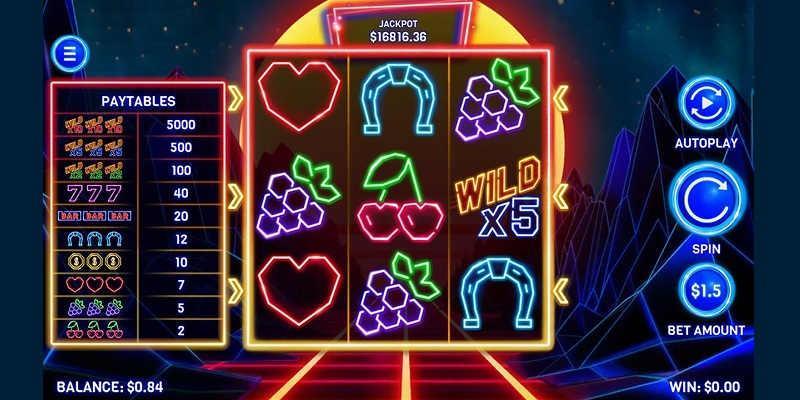
Finally, bear in mind that the house edge is the admission fee of entry to a form of recreation that can provide genuine excitement, suspense, and social connection. We craft our platform to amplify those positive elements through crisp game display, responsive support, and a community ambiance in live dealer chat. When you comprehend the cost structure, you can budget for it just as you would for concert tickets or a fine meal, with the added chance that variance may occasionally return the price and add a surplus. The player who internalises the mathematics stops perceiving the casino as a mysterious adversary and starts regarding it as a service provider with transparent pricing. We welcome that shift because it fosters long-term relationships built on mutual clarity. Your next session, armed with everything you now know about the edge, will feel fundamentally different, and we are confident it will feel better.
Promotions, Wagering Requirements, and the Effective Edge
A sign-up offer or refill promotion can momentarily shift the real odds in your favor, but only when you completely understand the stipulations attached. Our headline bonuses span deposit matches, free spins bundles, and cashback offers, each tailored with various player profiles in mind. The most critical number to review is not the headline percentage but the turnover requirement multiplier. A 100 percent match up to a certain amount with a 35-times wagering requirement means you must bet the bonus amount 35 times before converting bonus funds into cashable cash. During that wagering period, the house edge is constantly applied to every bet you make, eroding the bonus value. If you spin a slot with a 96 percent RTP, you can estimate to hold onto roughly 96 percent of the wagered amount on average, which informs whether the bonus stays net positive after fulfilling the turnover condition.
Various game categories play a role at different rates toward wagering requirements, and this weighting system is closely linked to house edge considerations. Slots almost always contribute 100 percent because their edges are higher on average, making it statistically harder to emerge ahead solely from bonus funds. Table games and live dealer titles commonly contribute between 5 and 20 percent, or may be excluded completely during active bonus periods, exactly because their lower house edges would offer a more efficient path through the turnover requirement. We make these contribution percentages openly visible in our promotional terms, so you won’t ever have to guess. Before accepting any offer, we recommend determining which games you genuinely want to play and then checking whether they count substantially toward the release conditions. Accepting a bonus and then gravitating toward games with zero contribution often leads to frustration that could have been avoided by reading the details first.
Cashback functions on a alternative logic and can be amongst the most uncomplicated promotions when evaluated through a house edge lens. Instead of front-loading extra funds with strings attached, cashback gives back a percentage of net losses over a set period as real or bonus money, sometimes with minimal or zero further wagering. This mechanism does not alter the house edge on the games themselves, but it successfully refunds a slice of the edge’s impact after the fact. If you play blackjack with a house edge of 0.5 percent and receive 10 percent cashback on losses, your net expected cost per unit wagered changes favourably, though the exact mathematics depend on your win-loss sequence. We position cashback as a loyalty-oriented buffer rather than a windfall generator, and it pairs especially well with methodical low-edge play over extended sessions.
In what manner Game Selection Straight Determines Your Expected Returns
Entering a vast game library without preparation is like going into a supermarket when famished and without a list. At Winwin Casino, our collection spans hundreds of slots, multiple live dealer tables, virtual table games, and specialty instant-win titles, and the house edge changes dramatically across these categories. If your goal is to extend a modest bankroll over a long, relaxed evening, focusing on low-edge table games and high-RTP slots is a practical tactic. Alternatively, if you are willing to trade a higher theoretical cost for a shot at a life-changing progressive jackpot, then the higher house edge on certain jackpot slots becomes an acceptable premium for that kind of thrill. No method is inherently superior; the mistake is participating without knowing which category you are actually in. We have built our navigation and filtering tools specifically so you can locate games by provider, volatility, and feature type, which helps you make choices aligned with what you now understand about the edge.
Live dealer games require special attention because they combine authentic casino atmosphere with rule sets that you can check in real time https://winwinscasino.org/. Our live blackjack tables often display the specific rules on the interface, and games like Infinite Blackjack or Speed Baccarat broadcast every shuffle and deal, giving you complete transparency. The house edge here remains exactly what the rules specify, but the social rhythm and slower pace of live play can naturally moderate the number of hands you complete per hour, which in turn impacts how much of your bankroll is exposed to the edge over a given period. Many experienced players believe that live dealer roulette feels more engaging while carrying the same mathematical properties as its virtual counterpart. The sensory richness of a real wheel spinning does not modify the edge, yet it can shift your perception of value because the entertainment dimension becomes more lively and tangible.
Slot volatility correlates with the house edge in ways that are often bleacherreport.com misunderstood. Two slots can share an identical theoretical RTP of 96 percent yet perform completely differently across a hundred spins. A low-volatility game will produce frequent but modest wins, helping your balance vary gently, whereas a high-volatility title might deliver long dry spells interrupted by explosive bonus rounds. Both return 96 percent over millions of spins, but your personal session outcome depends heavily on whether you trigger a feature during your specific play window. By integrating your knowledge of the house edge with an awareness of volatility, you can suit a game’s rhythm to your patience level and budget. We show volatility ratings where available, and we encourage you to test games in demo mode to experience their cadence before committing real funds.